
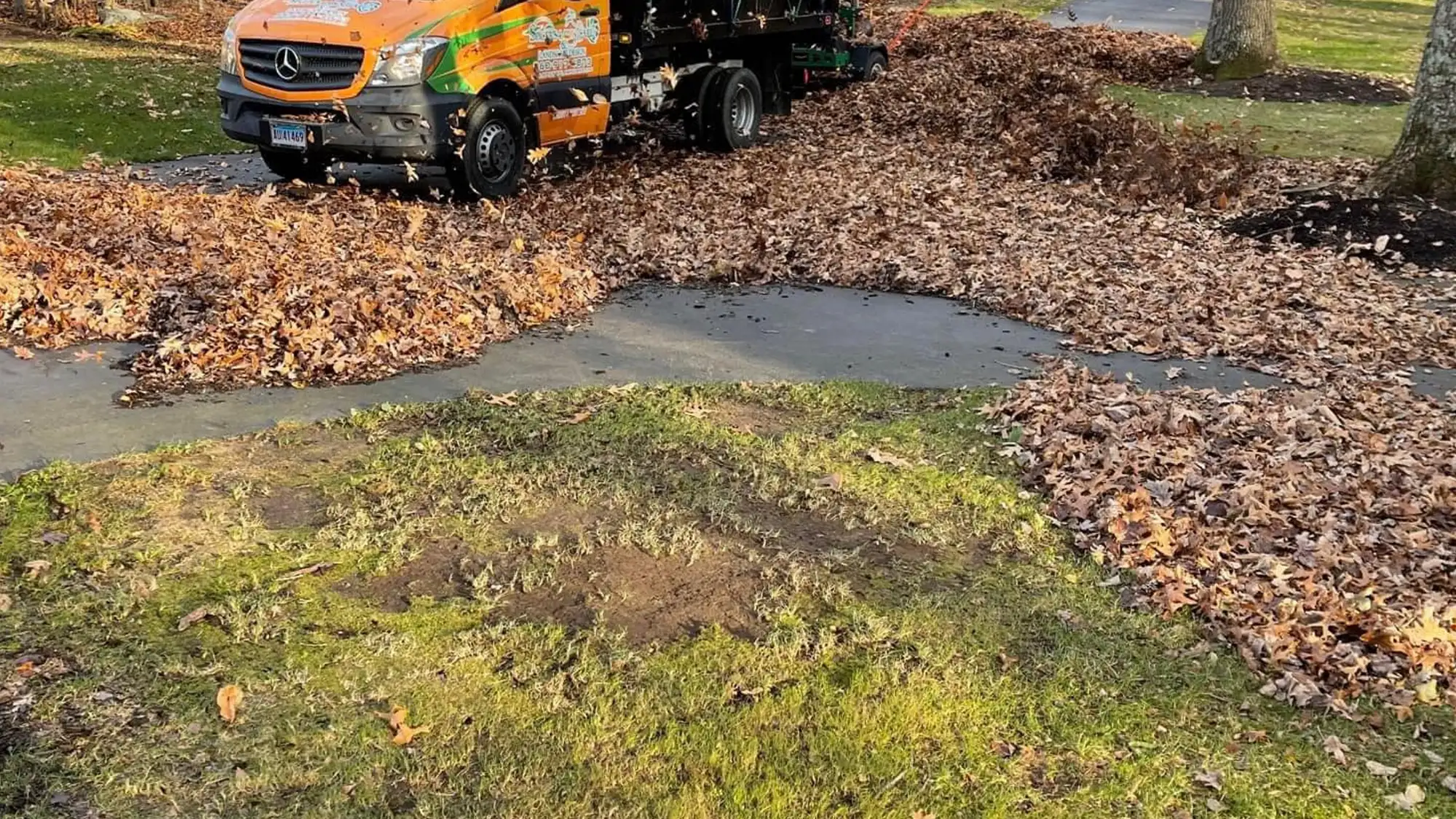
A healthier spring yard starts with knowing which fall jobs matter and which should wait. If your October planning begins with a search for landscaping in Connecticut, focus on your property’s condition rather than a standard treatment package. Spicer’s Lawn Care & Landscape Design LLC serves Ledyard and other New London County communities with seasonal cleanup, lawn care, and landscape services.
Clear Leaves Without Wasting Useful Material
Thick leaf mats can block sunlight and smother grass. Remove heavy accumulations, but consider mulching manageable amounts into small pieces that settle between grass blades. The lawn should remain visible rather than disappear beneath shredded leaves.
During your next lawn maintenance visit, identify priorities:
- Leaves collecting on turf and along walkways.
- Branches or debris interfering with mowing.
- Areas needing repeated attention as trees finish shedding.
Continue mowing while grass is growing instead of choosing an arbitrary final mowing date.
Check the Calendar Before Treating the Lawn
Aeration should address a real problem
Compacted, heavily used turf may benefit from core aeration, which opens channels for air and water. Ask whether conditions support treatment before scheduling lawn aeration services. Not every lawn needs the same intervention each autumn.
Seeding and fertilizer have different deadlines
October is not automatically the best seeding month. UConn identifies August 15 through mid-September as Connecticut’s preferred lawn establishment window. Discuss soil conditions and remaining growing time before attempting late repairs. Spicer’s lawn renovation services can help you plan improvements rather than rush unsuitable work.
Fertilizer is also conditional, not mandatory. Use soil-test recommendations and the lawn’s needs; UConn advises against fall applications after October 15. A late cleanup appointment should not automatically include feeding.
Prepare Beds Selectively
A tidy bed does not need to be stripped bare. Healthy stems and seed heads can provide winter habitat, while diseased material deserves separate removal.
Work through beds in this order:
- Sort debris. Remove diseased foliage rather than adding it to ordinary home compost.
- Check the soil. Base amendments on testing instead of adding compost or fertilizer indiscriminately.
- Plan spring color. Plant suitable spring-flowering bulbs in cool, workable soil before it freezes, following variety-specific depth and spacing instructions.
Mark bulb locations so later cleanup does not disturb them. Avoid assuming every perennial should be divided or replanted in October.
Protect Roots Without Burying Trunks
Check existing mulch before adding more. Keep bark mulch away from tree trunks and plant crowns, and avoid piling fresh material over an already deep layer. Mulch moderates temperature and moisture; it does not make plants frostproof.
Winter insulation is a separate timing decision. UConn recommends waiting until the ground freezes before adding protective winter mulch around perennials. Continue watering new plantings during dry weather as conditions require.
Inspect Water Flow and Walking Surfaces
Photograph persistent puddles, eroded edges, or uneven lawn areas after rain. Spicer’s grading services address terrain problems that may need more than cleanup.
Check paths and patios for loose units or uneven surfaces. Discuss concerns through the company’s hardscaping services rather than covering problem spots with leaves or mulch.
Frequently Asked Questions
Should every lawn receive fall fertilizer?
No. Soil information, turf condition, previous applications, and seasonal timing should guide the decision.
Must all leaves leave the property?
No. Suitable leaves can be mulched or composted, provided they do not form thick mats over turf.
Is October suitable for planting bulbs?
Yes, when soil is cool and workable. Follow the planting requirements for each variety.
Give Your October Tasks a Clear Order
Turn your landscaping connecticut search into priorities for your own property. Contact Spicer’s Lawn Care for a free estimate covering seasonal cleanup and appropriate follow-up services. Discuss what needs attention now, what requires assessment, and what should wait for better growing conditions.